
Gunpowder, treason and plot: the 1,000-year history of traitors and faithfuls


Stories from the archives
2024
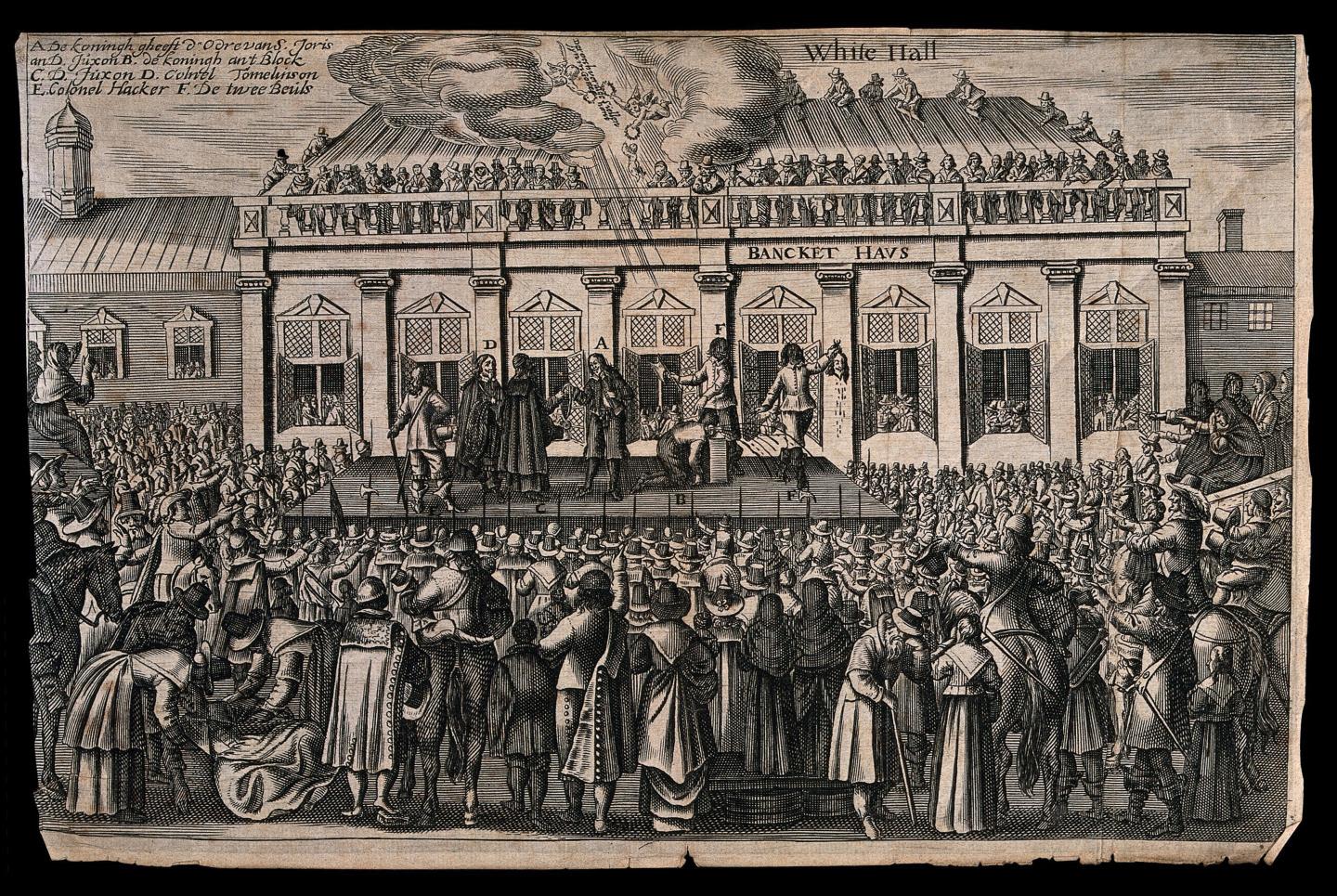

“The history of treason is full of paranoid kings and queens, truculent medieval barons, assassins and plotters. It also tells perhaps more edifying tales of revolutionaries, priests and statesmen prepared to die for their faith and beliefs”
From the Bible to smash-hit BBC television show The Traitors, being accused of betrayal is a sure-fire way to become notorious.
Everyone has heard of Judas, Guy Fawkes, and Anne Boleyn, not least because treason is the most serious crime that anyone can commit – under English law it is considered in a class of its own, worse even than murder.
But what is treason? For many it is simply a personal offence, a breach of trust, fidelity and allegiance. But the ancient and contentious English law essentially criminalises an action or plot that threatens the life of a king or queen. Conspiring against the monarch, levying war on them, and supporting their enemies, are determined to be so serious that these offences are also seen as an assault on the nation.

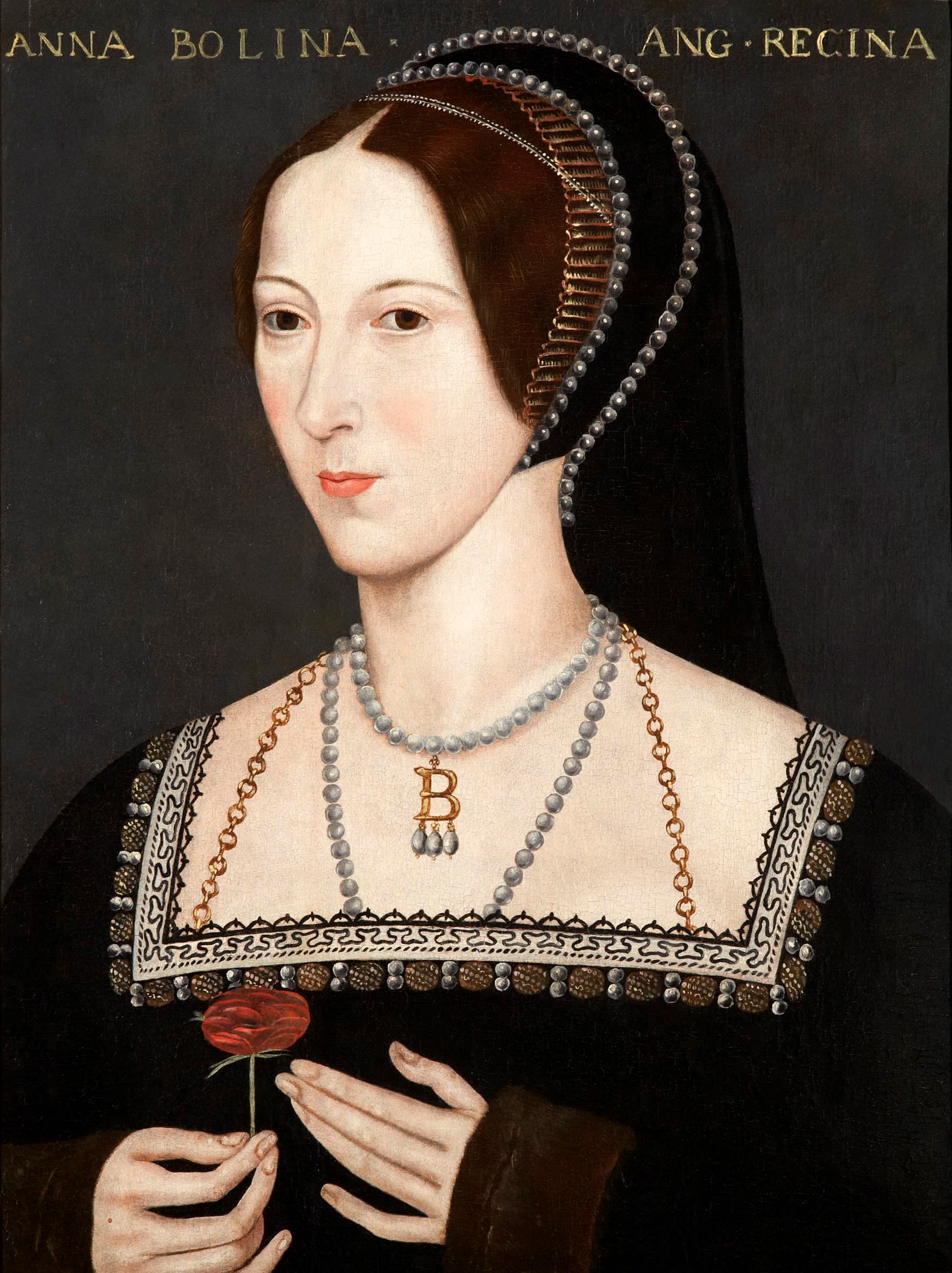
Near contemporary painting of Anne Boleyn at Hever Castle, c1550
Near contemporary painting of Anne Boleyn at Hever Castle, c1550
In practice treason was used to punish many things: not producing a male heir for Henry VIII, talking to an astrologer, making counterfeit money, and murdering a royal official when carrying out their duties.
Now a new book has been published that traces, for the first time, the entire history of the English law of treason. It spans more than 1,000 years from English treason’s biblical, Roman and Anglo-Saxon roots to the present day.
“The law of treason evolves over centuries and was used as a weapon of control and as a deterrent. This blunt instrument of power was particularly useful in an age before police forces, when there was no money for bureaucracy or armies”
For centuries, the death penalty was the only punishment judges could hand down to anyone found guilty of treason. The last person to be tried and executed for this crime in England was William Joyce, who was hanged in 1946. Known as ‘Lord Haw-Haw’, Joyce fled England for Germany and made pro-Nazi broadcasts throughout the Second World War.

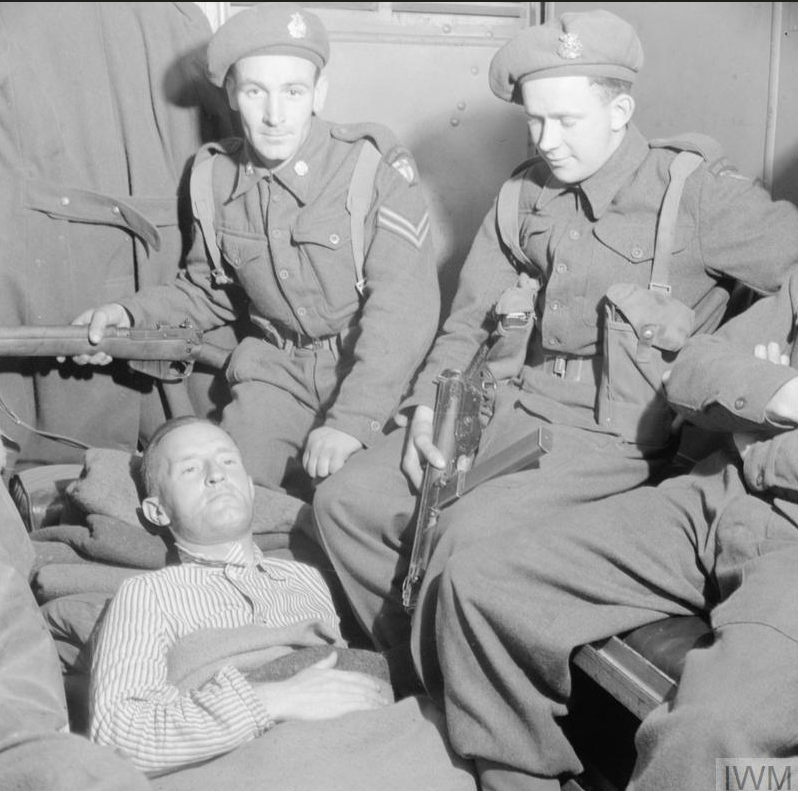
William Joyce, known as Lord Haw Haw, lies in an ambulance after his arrest by British officers at Flensburg, Germany, on 29 May 1945. Credit: Imperial War Museums
William Joyce, known as Lord Haw Haw, lies in an ambulance after his arrest by British officers at Flensburg, Germany, on 29 May 1945. Credit: Imperial War Museums
Dr Mark Nicholls, Historian and Fellow of St John’s College, University of Cambridge, co-author of The Rise and Fall of Treason in English History, said: “The law of treason evolves over centuries and was used as a weapon of control and as a deterrent. This blunt instrument of power was particularly useful in an age before police forces, when there was no money for bureaucracy or armies.
“There are lots of gory stories to relate as we chart the history of treason. This book tells the tale of public executions, with the bodies of male traitors being hanged, drawn and quartered, while women were usually burned at the stake. The history of treason is full of paranoid kings and queens, truculent medieval barons, assassins and plotters. It also tells perhaps more edifying tales of revolutionaries, priests and statesmen prepared to die for their faith and beliefs.”
Dr Nicholls and his co-author, the American historian and lawyer Dr Allen Boyer, detail the chequered history of treason, including how noblemen got special treatment by being beheaded rather than hanged as it was a ‘clean death more fitting of their status’.
The book describes how the burning alive of women was stopped, not out of squeamishness for their suffering, but because of the ‘terrible smell’ that wafted across central London.
The book also tells how Simon Fraser, 11th Lord Lovat, was found guilty of treason for the second time in 1747 and was the last man in Britain to be beheaded at the age of 80. A crowd of 150,000 people turned up at Tower Hill to watch the execution and a stand built for the occasion collapsed, killing dozens of onlookers.
Lovat found this tremendously amusing, and his reaction is said to be the origin of the phrase ‘laughing your head off’.
Dr Nicholls explained: “Through much of English history, kings ultimately rely on the consent of their leading subjects to govern effectively, so bringing charges of treason against these people is not without risk as it highlights that the country is divided, which can weaken a monarch’s position. The last thing monarchs want is to be laughed at.”
“The Traitors programme addresses acts of treachery and betrayal between individual private citizens, and demonstrates how today we are still entertained by people accused of double-dealing – trust after all should never be given blindly”
The book delves into King Henry VIII’s now notorious use of treason, but Dr Nicholls believes this is a symptom of his vulnerability and paranoia: “Henry plays with the law of treason but he does it by the statute book. There are something like 68 changes to the definition of treason in the 16th century alone, many of these under Henry VIII, but he is for the most part scrupulous in going forward via parliament, and the appearance of wider consent.
“Henry acts out of genuine and understandable paranoia because he is frightened that he has divided his country by the break with Rome and weakened it by not providing a male heir. But other Tudor monarchs also made extensive and at times promiscuous use of treason.”
Dr Nicholls and Dr Boyer describe high-profile prosecutions and trials, including many miscarriages of justice, and, moving away from the precise letter of the law to more popular expressions of bad faith, explore why the accusation of being a traitor is still so commonplace and powerful in today’s society.
Dr Nicholls said: “For centuries loyalty to the monarch and country has been held in high regard as it helps unify the nation and, in theory, should keep people safe. So being accused of treason was very serious indeed.”
Today things might superficially seem different, but with modern communications, instant reactions and no end of contentious topics on which to chew, anyone can now accuse someone of being a traitor, and they do so without, of course, any risk of prosecution under the ancient laws.
“These instant ‘risk free’ judgments in emotive causes have been around for a while. Winston Churchill was accused of being a traitor for reneging on a promise to support votes for women – such an accusation is the ultimate way to get something off your chest.”

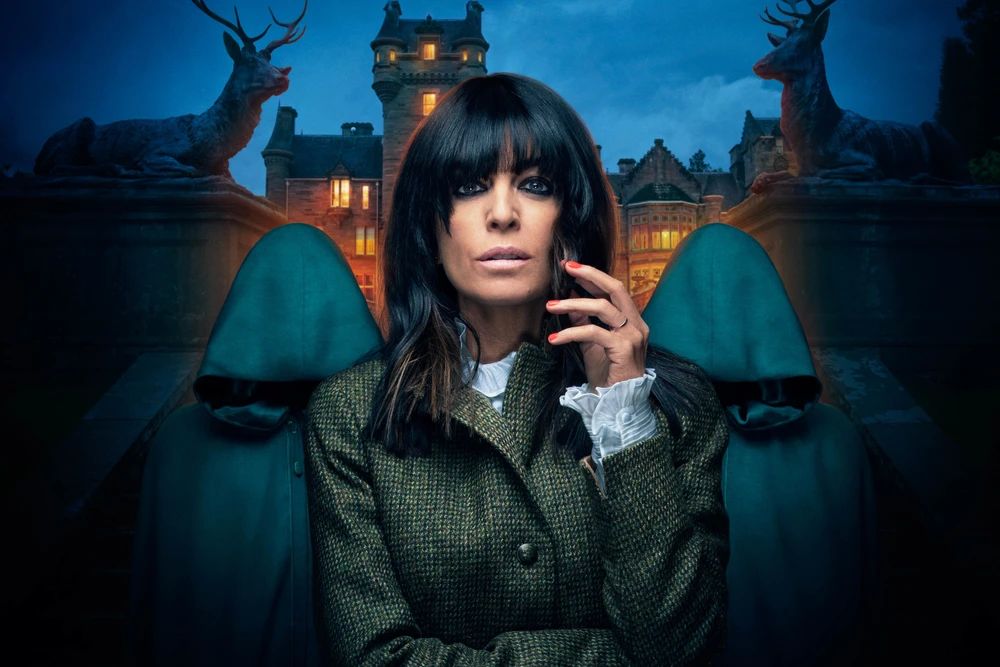
Claudia Winkleman in The Traitors. Credit: BBC Studio Lambert Associates Mark Mainz
Claudia Winkleman in The Traitors. Credit: BBC Studio Lambert Associates Mark Mainz
It is worth remembering that treachery and treason are not synonymous. Dr Nicholls notes: “The Traitors programme addresses acts of treachery and betrayal between individual private citizens, and demonstrates how today we are still entertained by people accused of double-dealing – trust after all should never be given blindly. It’s a good life lesson. But betrayals of this sort would not (and should not) invariably lead to prosecution and convictions in a court of law.”
Though no longer pursued in the high criminal courts, treason is still a crime in England, and Dr Nicholls feels it is likely to remain one for ‘many years to come’.
He added: “There are regular calls for centuries-old treason legislation to be abolished, but if revisions are to be made to the statute book there are many other more current laws that claim a legislator’s priority.
“The treason law now just makes a useful statement of principle, all the more emphatic, perhaps, for the complete absence of any recent prosecution.”
The Rise and Fall of Treason in English History
This article was originally published on the St John's College website in January 2024
 Built with Shorthand